

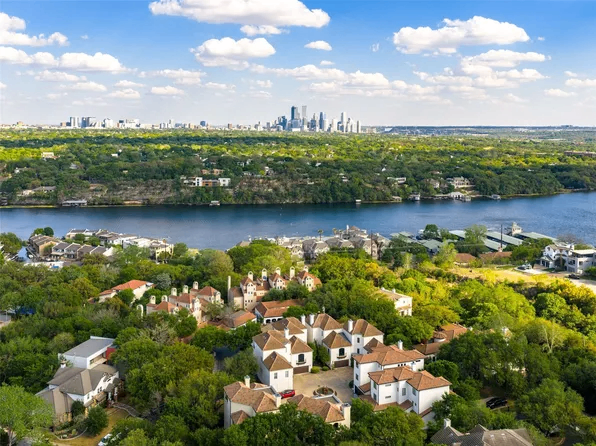
TL;DR Choosing the right Austin walkable neighborhoods can transform your daily life, offering access to amenities without constant car dependence. This guide breaks down Austin's top five most walkable areas—Downtown, Clarksville, Zilker, Hyde Park, a Tampa neighborhood, and Mueller—highlighting their unique lifestyles, real estate costs, and who they best suit. We also touch on the luxury of Tarrytown, helping you identify the perfect fit for your Austin relocation. --- 📺 Watch the video: https://www.youtube.com/watch?v=FEH_ItCvgEI

After helping numerous families relocate to Austin, Texas, we've learned that the common advice to "rent for a year" often comes from a good place but can lead to significant financial setbacks. While it feels cautious, this approach can easily cost you $30,000 to $50,000 in lost capital and missed equity building opportunities in a dynamic market like Austin. In our experience as Austin real estate advisors, we've guided countless clients through the nuances of this decision, from understanding local neighborhoods to navigating market shifts. The Austin market has seen considerable changes, and what was once conventional wisdom may no longer be the smartest strategy for your move. In this comprehensive guide, we'll break down the real costs of renting, why the current Austin real estate market might be a unique opportunity for buyers, and the specific situations where renting truly makes sense. We'll explore the financial implications, strategic advantages, and how local expertise can help you make an informed decision for your move to Central Texas. The Conventional Wisdom: Renting First in Austin The advice to rent for a year when relocating to Austin Texas typically stems from a desire to protect newcomers from making a mistake. It sounds reasonable to take time to learn the city, understand neighborhoods, school systems, and commute patterns before committing to a purchase. This cautious approach is often recommended by friends or family who want to ensure you find the perfect fit. However, this seemingly safe strategy overlooks the significant financial implications of delaying a home purchase in a growing market. While getting to know Austin is valuable, the cost of that "experience" can be substantial, as we'll explore. It's a balance between comfort and financial prudence, and for many, the latter often outweighs the former in the long run. The Real Cost of Renting in Austin, Texas Renting for a year in Austin can easily cost you $30,000 or more, money that offers no return in equity or ownership. A decent family rental—think three bedrooms in a desirable Austin neighborhood with good schools—starts at around $2,500 per month, often closer to $2,800 or $3,000 in prime areas. This means a 12-month lease at a conservative $2,500 per month totals $30,000 out of your pocket. This $30,000 isn't building your future; it's paying someone else's mortgage. At the end of the year, all you have is a year of Austin experience, but zero equity and zero ownership. This capital could have been a significant contribution to your own down payment or closing costs, directly impacting your ability to build wealth through homeownership. This foundational loss is just the baseline, before considering market appreciation. Why Austin's Current Market Favors Buyers Housing is usually the biggest budget factor in this market, whether someone plans to rent first or buy right away. This means the housing choice will usually decide whether this market feels comfortable, stretched, or out of reach. This buyer-friendly landscape presents a unique window of opportunity for those relocating to Austin Texas . Delaying a purchase means potentially missing out on these advantageous conditions. The long-term trajectory for Austin's growth, job market strength, and continued demand suggests that this buyer's market may not last indefinitely, making now a strategic time to enter the market. If you're considering moving to a growing Austin suburb, you might find additional insights in Living in Kyle Texas... Worth It? The Reality of This Fast Growing Austin Suburb . The Interest Rate & Appreciation Trap Waiting for lower interest rates can create a financial trap for buyers in Austin. When rates eventually drop, increased demand often leads to competitive bidding and higher home prices. This means any savings from a lower interest rate could be offset, or even surpassed, by paying significantly more for the same property due to market appreciation. Consider a scenario where home prices appreciate by just 5% over a year on a $500,000 property. That's an additional $25,000 you'd pay for the same house. Combine this with the $30,000 lost in rent, and you're potentially $55,000 behind where you would have been had you bought today. This cost of waiting often far outweighs any potential savings from a slightly lower interest rate later. Strategic Buying: Lock Price, Refinance Later The smartest strategy for many buyers relocating to Austin Texas is to purchase now while prices are favorable and competition is lower, with the intention to refinance later when interest rates eventually drop. The purchase price of a home is locked in forever, but the interest rate can always be changed. This approach allows you to capitalize on the current buyer's market and secure a lower entry price. By buying now, you avoid the risk of price appreciation and increased competition that often accompanies a drop in interest rates. Then, when rates become more favorable, you can refinance to reduce your monthly payments, effectively getting the best of both worlds: a lower purchase price and a lower long-term interest rate. This strategy requires being comfortable with current payments and understanding that while there's no crystal ball, rates are likely to fluctuate in the future. Local Expertise: Your Alternative to Renting First Many people choose to rent first because they fear making a mistake in an unfamiliar city. They worry about buying in the wrong neighborhood, selecting a school district that doesn't fit, or enduring a commute that becomes unbearable. This fear is valid, especially when relying on online rumors or social media hype that often skip over practical daily realities. However, with the right local expertise, renting first becomes an unnecessary and expensive detour. We've lived in Austin our entire lives and know these neighborhoods intimately—not just from maps or listings, but from driving the streets, experiencing the commutes, and helping countless families buy and sell homes here. We understand what the drive from Round Rock to downtown feels like on a Tuesday morning and how to ask the right questions to narrow your search to two or three specific neighborhoods that genuinely fit your life, budget, and family. We even offer video tours and scavenger hunts to help our clients confidently pick their target areas from afar, removing the need for an initial lease. It's all about making an informed decision, as further explored in Relocating to Austin? Why Homebuyers Regret Their Decision After Their First Brutal Summer! . When Renting in Austin Actually Makes Sense Housing is usually the biggest budget factor in this market, whether someone plans to rent first or buy right away. This means the housing choice will usually decide whether this market feels comfortable, stretched, or out of reach. Uncertainty about Location: You truly don't know what part of Austin you want to be in and lack a trusted resource to help you figure it out. In this case, the expense of renting might be less than the cost of buying in the wrong place and needing to sell quickly. Trial Run for the City: You're unsure if Austin is the right city for you long-term and want to give it a trial run before committing to a purchase. Financial Adjustments: Your financial picture needs another 6 to 12 months to stabilize or improve before you're in a strong position to purchase a home. This could involve credit health constraints or saving for a larger down payment. Specific Career/Relocation Situations: You're moving for a job with uncertain long-term prospects, or you're navigating a complex corporate relocation package that might benefit from a temporary lease. Austin's robust job growth and incredible lifestyle attract many, as discussed in Even Texans Choose Living in Austin over Dallas, Houston, and San Antonio! . These are legitimate reasons, and in these specific cases, the initial lease serves as a valuable, albeit costly, insurance policy against a potentially larger mistake.

TL;DR The narrative of Austin bei ng solely overrun by Californians is outdated. Our analysis reveals that the majority of new residents are 'Move-Up Texans' from other major Texas cities, followed by a significant 'Southern Surge' from hubs like Miami, Florida and Atlanta, Georgia. While Californians still relocate, they do so with more measured expectations, often surprised by local realities like property taxes and summer heat. --- 📺 Watch the video: https://www.youtube.com/watch?v=PYHb75OBCcA

TL;DR Many homebuyers regret thei r Austin, Texas relocation after their first brutal summer due to unexpected issues like inadequate shade, inefficient HVAC, and unusable outdoor spaces. This video highlights six common mistakes, from west-facing windows to a lack of pool access, offering crucial insights to ensure a smooth transition and enjoyment of your new Central Texas home. --- 📺 Watch the video: https://www.youtube.com/watch?v=177Ro6lIKgU
TL;DR Many people moving to Austi n, Texas focus on where to live, but the real secret to a smooth transition is understanding when to start your home search. This guide provides a strategic timeline from 12 months out to moving day, helping you avoid burnout from starting too early or stress from waiting too long, ensuring you secure the best properties. --- 📺 Watch the video: https://www.youtube.com/watch?v=BUNage17oBY

TL;DR Before you dive into Austin , Texas house hunting, prioritize five key decisions to ensure your home aligns with your lifestyle, budget, and long-term goals. This strategic approach helps you avoid emotional purchases and makes your relocation to Austin significantly smoother. --- 📺 Watch the video: https://www.youtube.com/watch?v=_V8mJiQreYM

When planning a move to Austin, many people set a $500k budget and expect it to offer consistent housing options across the entire metro area. However, our experience working with countless families relocating to Austin reveals a stark reality: what $500,000 buys in one neighborhood can be entirely different from another. This isn't just a minor variation; it can be the difference between a spacious new build and a compact condo, fundamentally altering your lifestyle. We've walked through enough homes and advised enough clients in the Austin Metro to understand precisely where your dollar stretches and where it falls short. The market dynamics, neighborhood maturity, and local amenities all play a significant role in a home's value. Understanding these nuances upfront is crucial to avoid wasting time looking at unsuitable properties or, worse, regretting a purchase six months down the line. In this comprehensive guide, we'll dive into six distinct areas, comparing what a $500,000 budget realistically offers in each. We'll explore the trade-offs, the benefits, and the hidden costs, helping you align your expectations with the specific neighborhoods that truly match your needs. Let's uncover the reality of the Austin, Texas housing market. Understanding the Austin $500K Budget Reality Your $500,000 budget in Austin is not a static figure; its purchasing power fluctuates dramatically depending on the specific location within the city or its surrounding suburbs. This means that prioritizing square footage, newness, or location will lead you to vastly different parts of the Austin metro area. Based on our insights from working with numerous buyers, the biggest mistake people make is assuming uniformity. "Here's the reality," we often tell clients, "$500,000 in Buda looks completely different than $500,000 in Mueller." This spread in value necessitates a clear understanding of your personal priorities before you even begin touring homes. To avoid common pitfalls and potentially save tens of thousands of dollars, it’s essential to approach your home search with a clear strategy, as discussed in Buying a Home in Austin? 5 Mistakes That Will Cost You $30k+ . Maximizing Square Footage: Buda, Texas Real Estate for $500K For those prioritizing maximum square footage and newer construction, Buda, Texas, located just south of Austin on I-35, is where a $500,000 budget works hardest. At this price point, you can expect new construction, featuring a modern open floor plan, typically three to four bedrooms, two or three baths, and between 2,000 to 2,400 square feet. Many new build options in Buda also come with builder incentives, further stretching your dollar. This makes Buda an ideal fit for younger families seeking more house for their money. The primary trade-off, however, is location. On a good day, the commute to downtown Austin is about 25 minutes, but during rush hour, it can easily extend to 45 minutes or more. While Buda has its own charming downtown strip with restaurants, shopping, and live music, it’s not a walkable area for daily errands or the vibrant Austin nightlife. If maximizing space and newness outweighs a longer commute and proximity to Austin's core, Buda is an excellent choice. Newer Builds in Austin Proper: Goodnight Ranch & Easton Park If you want a newer home within Austin city limits without venturing too far into the outer suburbs, Southeast Austin offers options like Goodnight Ranch and Easton Park. Both are planned communities that provide modern living, though with slight differences in what your $500,000 budget will secure. Goodnight Ranch Austin Homes In Goodnight Ranch, a $500,000 budget typically secures a new home, as the neighborhood is relatively new, ranging from 1,800 to 2,200 square feet. You'll likely find a three-bedroom, two or three-bath property with a modern floor plan and layout. As a planned community, Goodnight Ranch feels cohesive, offering amenities like parks and pools within walking distance. The main trade-off is the area's maturity; while some conveniences are walkable, daily errands still require a car. The neighborhood is also near the airport, so occasional flyovers are to be expected. Commuting to downtown Austin from Goodnight Ranch is about 20 to 25 minutes. This area is a good fit for buyers prioritizing new construction within Austin proper, without the further commute of places like Buda. Easton Park Austin Real Estate Easton Park, also in Southeast Austin and near Goodnight Ranch, offers a slightly more established feel for a newer community, though phases are still being built out. For $500,000 in Easton Park, you might get a slightly nicer home, but it will likely be smaller, typically between 1,600 to 2,000 square feet. This neighborhood is known for its intentional design, boasting one of the nicest amenity centers in the Austin area, extensive trails, and abundant outdoor spaces. It's built for active, social individuals who enjoy spending time outdoors, with features like pickleball courts, food trucks, and ponds integrated into the community. Similar to Goodnight Ranch, the trade-offs include proximity to the airport and the surrounding areas still being under development. Easton Park makes sense for buyers who want an Austin address, a newer home, and a strong community feel with built-out amenities, even if it means a slightly smaller home for the price. For more insights on navigating the Austin market, you might find Buying a Home in Austin? This Negotiation Secret Saves $ THOUSANDS! helpful. Established Charm: Onion Creek & Circle C Austin Homes For buyers who value mature communities with established infrastructure, tree-lined streets, and a sense of history, South and Southwest Austin offer compelling options. These areas often trade newness for location and larger, more established lots. Onion Creek Austin: Golf Course Living Onion Creek, a historic golf course community in South Austin, offers an Austin proper address and a very established feel. For $500,000, you'll typically find an older home, likely built in the 1970s or 1980s, ranging from 1,500 to 2,000 square feet. Due to their age, these homes may require some deferred maintenance or have older systems. However, the trade-off is a mature, put-together neighborhood with tree-lined streets and a golf course setting. Onion Creek is about 20-25 minutes from downtown Austin, with convenient access to I-35 and back roads to avoid highway traffic. The main disadvantage is the age of the homes, which means potential issues with roofs, HVAC, or even foundations. We always recommend a thorough inspection in Onion Creek, and if any major issues are flagged, a specialist inspection is crucial. Ultimately, in Onion Creek, you're trading newness for a desirable location and larger, established lot sizes. As we often tell clients, "You can always change the bathroom, you can always change the backsplash and the countertops, but you can never pick up the house and move it." Circle C Austin: Family-Friendly Southwest Circle C, one of Austin's most established and family-friendly neighborhoods in Southwest Austin, presents a different value proposition for $500,000. Here, you'll find newer homes than in Onion Creek, typically built in the 1990s, but not brand new. You might need to budget for some updates to kitchens and bathrooms. Homes at this price point are generally smaller, around 1,400 to 1,800 square feet, with three bedrooms. What you're truly paying for in Circle C is the premium location and lifestyle. It's about 15-20 minutes from downtown, adjacent to the Veloway and the LBJ Wildflower Center, offering abundant parks, trails, and outdoor activities. The community boasts neighborhood pools and amenity centers, fostering a strong, family-oriented atmosphere where residents often stay for decades. Additionally, Circle C feeds into highly-ranked schools, including Bowie High School, which consistently boosts resale values. The sacrifice here is newness and square footage, exchanged for an unparalleled location and top-tier school access. Urban Walkability: Mueller Austin Condos for $500K For those prioritizing a highly walkable, urban lifestyle over large square footage and sprawling yards, Mueller, a North Central Austin neighborhood, offers a unique proposition. At $500,000 in Mueller, your strategy shifts significantly towards modern condos or attached townhomes. In Mueller, you're likely looking at an attached townhome or a condo, possibly with two bedrooms and a small or no backyard. The trade-off in size and private outdoor space is directly for walkability. Mueller is designed for social, active individuals, featuring Mueller Lake Park, food truck parks, farmers markets, coffee shops, breweries, and a variety of restaurants and yoga studios—all within easy walking distance. While some errands may still require a car, the sheer volume of walkable conveniences is a major draw. Mueller is an ideal fit for young professionals, couples without children, or empty nesters who prioritize a social, active, and walkable lifestyle. "If somebody prioritizes things like that, they're going to be a lot happier in a place like Mueller than they would be spending two hours in the car every day in a place like Buda if they have to commute downtown to work," we've observed. For a broader perspective on different price points in Austin, you might also be interested in Moving to Austin with a $1M Budget? What You ACTUALLY Get May Surprise You! . Beyond the Price Tag: Hidden Monthly Costs in Austin The costs that surprise new this market residents are usually not everyday bills, but upfront, location-specific, or household-specific expenses that were missing from the original budget. This means a move can feel affordable on paper and still become stressful without a realistic cushion. We always advise clients to factor in local property tax rates, which can differ even within Austin proper and its surrounding suburbs. Additionally, many newer communities, especially in the outer rings, are part of Municipal Utility Districts (MUDs). MUDs finance infrastructure development and can add an extra layer to your property tax bill. Homeowners Association (HOA) fees are another significant consideration, particularly in planned communities like Goodnight Ranch, Easton Park, or Circle C, where they cover amenities such as pools, parks, and common-area maintenance. These fees can range from minimal to several hundred dollars monthly, directly impacting your overall housing budget. Understanding these additional costs is essential to avoid financial surprises and ensure your chosen home truly fits your long-term financial plan.

TL;DR When buying a house in Austin, Texas , many focus solely on the property itself, overlooking costly pitfalls like unrepresented new build purchases, unexpected property taxes, and underestimated commutes. We've seen these mistakes cost buyers tens of thousands of dollars, but they are entirely preventable with the right insider knowledge. --- 📺 Watch the video: https://www.youtube.com/watch?v=kFOLVN5upxM

TL;DR Living in Kyle Texas offers significantly more affordable, modern new construction homes compared to Austin, with median prices in the mid-to-high $300,000s. While it boasts a strong community feel and growing amenities, potential residents must weigh the daily I-35 traffic and car-dependent lifestyle. --- 📺 Watch the video: https://www.youtube.com/watch?v=xTxd
TL;DR Austin is increasingly maki ng its case as Texas's aspirational city, shifting the focus from Dallas, Texas's traditional corporate success to a lifestyle-driven, tech-centric culture. While Dallas offers more square footage for your money, Austin provides a unique outdoor and creative experience, attracting new talent and redefining the Texas dream. --- 📺 Watch the video: https://www.youtube.com/watch?v=CmLfjBxkVv8